

As we mark the CW Innovation five-year anniversary, Dr Sadia Khan, Consultant Cardiologist at Chelsea and Westminster Hospital NHS Foundation Trust and Clinical Lead for Innovation, reflects on how the programme has supported remote patient monitoring at the Trust, and how this technology has improved patient care.
What is remote patient monitoring (RPM) and how are we using it at the Trust?
RPM can mean different things, but when I use it I’m generally talking about patients monitoring their health at home and sharing data with clinicians who are not physically present. Common examples include people monitoring their blood pressure and blood sugars at home.
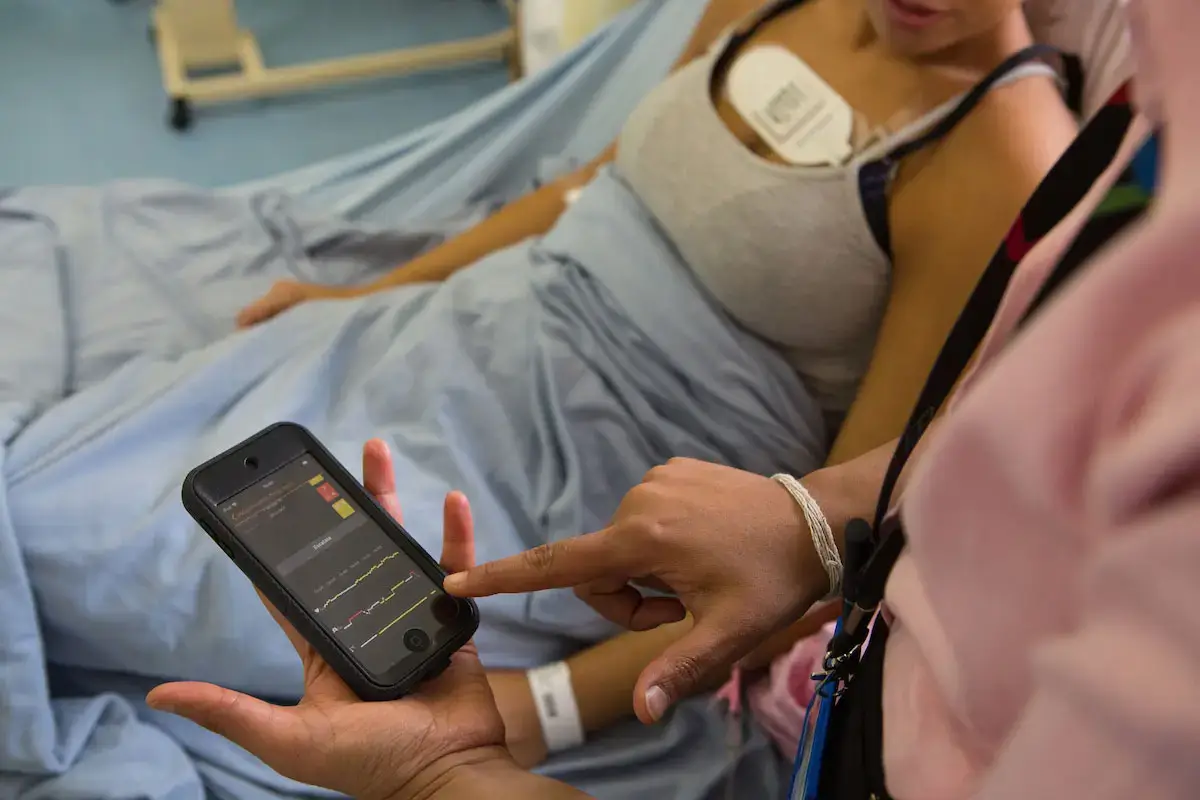
The Trust has also used remote patient monitoring in acute areas, such as during the early part of the COVID-19 pandemic with Sensium, which involves a wearable patch to monitor three key indicators of patient deterioration every two minutes – heart rate, breathing rate and temperature – without having to wake up or disturb the patient to take these readings manually every four hours. We used the technology outside a hospital setting in a facility for people who were isolating or COVID positive to monitor their physiological data. Although not true remote monitoring because it was within a healthcare setting and clinicians were on site, it’s effectively the same idea.
We also use this type of remote monitoring within our hospitals. For example, Portrait Mobile is a wearable technology that provides a personalised, real-time view of the condition of hospitalised patients. The device allows you to get hospital-level monitoring and care while you’re walking around. So instead of having to be confined to a hospital bed you can get moving – which is really important to your recovery – without worrying that you are missing important checks.
What are the benefits of RPM?
From a patient perspective, you can receive acute-level specialist care in your own home, which reduces disruption to family life. You also don’t have the problems that come with being in hospital, which include lack of mobility, agency and control. You can maintain your physical fitness, and you can eat your own food! Ultimately, RPM gives patients much greater control over the management of their own health, while simultaneously providing peace of mind that vital health information is being monitored by professionals.
RPM can also lead to improved health outcomes. An example is the heart failure remote monitoring programme that one of our specialist pharmacists is leading. It enables patients to get up-titrated to the optimal medication – this means gradually increasing the amount of medication until you reach the dose that is most effective for you – more quickly than can be achieved under standard care. And this actually lowers your risk of being hospitalised or dying, because you’ve got the correct treatment and it’s been personalised to you.
RPM also helps healthcare more broadly. Clearly, if healthcare in general is better, people need to spend less time in hospital, freeing up resource for others. For example, in our atrial fibrillation (AF) virtual ward, patients are effectively triaged remotely, allowing health deteriorations to be recognised early, ensuring that they receive timely medical attention or emergency care, which in turn reduces the likelihood of subsequent Emergency Department re-attendances.
Can you tell us about some other projects that the CW Innovation programme has supported?
Over the past five years, the CW Innovation programme has evolved. It now has a dedicated team and partners, and has provided funding and support to test and develop ideas. Numerous RPM projects have become part of the CW Innovation portfolio.
One example is the Klick mobile app codeveloped with ViiV Healthcare, which allows patients with HIV to manage appointments, complete health assessments, review results and communicate with their healthcare team from the comfort of their own home.
Another is the DBm-Health app codeveloped with Sensyne Health, which enables patients with diabetes to remotely monitor blood glucose levels while allowing clinicians to see their results, stay in regular contact with them, and reduce the need for hospital visits. This has been shown to improve diabetes-related outcomes.
Another highlight includes establishing a first-of-its-kind virtual ward for women with nausea and vomiting in early pregnancy (hyperemesis) at the Trust. The SIPS (Sickness Information, Pregnancy Care and Self-evaluation) app, built on the Luscii platform, provides reliable information to women with hyperemesis, also helping to improve their management and care. Women can self-monitor, which cuts down hospital attendances and allows staff to focus on more urgent cases.
CW Innovation has provided me with the opportunity to evaluate what I’ve done, and that lets me then share it, spread it, scale it, or say, ‘well, actually, that really didn’t work, did it? Let’s start again.’ We had a CW+ grant, and were supported by the CW Innovation programme, to help get our AF virtual ward started, and now we’re sharing our ideas with colleagues in Ireland, who are looking to take on our model, so it’s spreading beyond our local community.
What are the challenges in RPM?
Ensuring that patients and staff have confidence in the technology and the process we use is really important. I don’t think we spend enough time building the messaging around remote monitoring, so sometimes, inadvertently, we can give a message that says: ‘The reason we’re doing this is because the NHS doesn’t have enough resources so you can’t come into hospital.’ But it’s really not that at all. It’s about providing choice and improving outcomes.
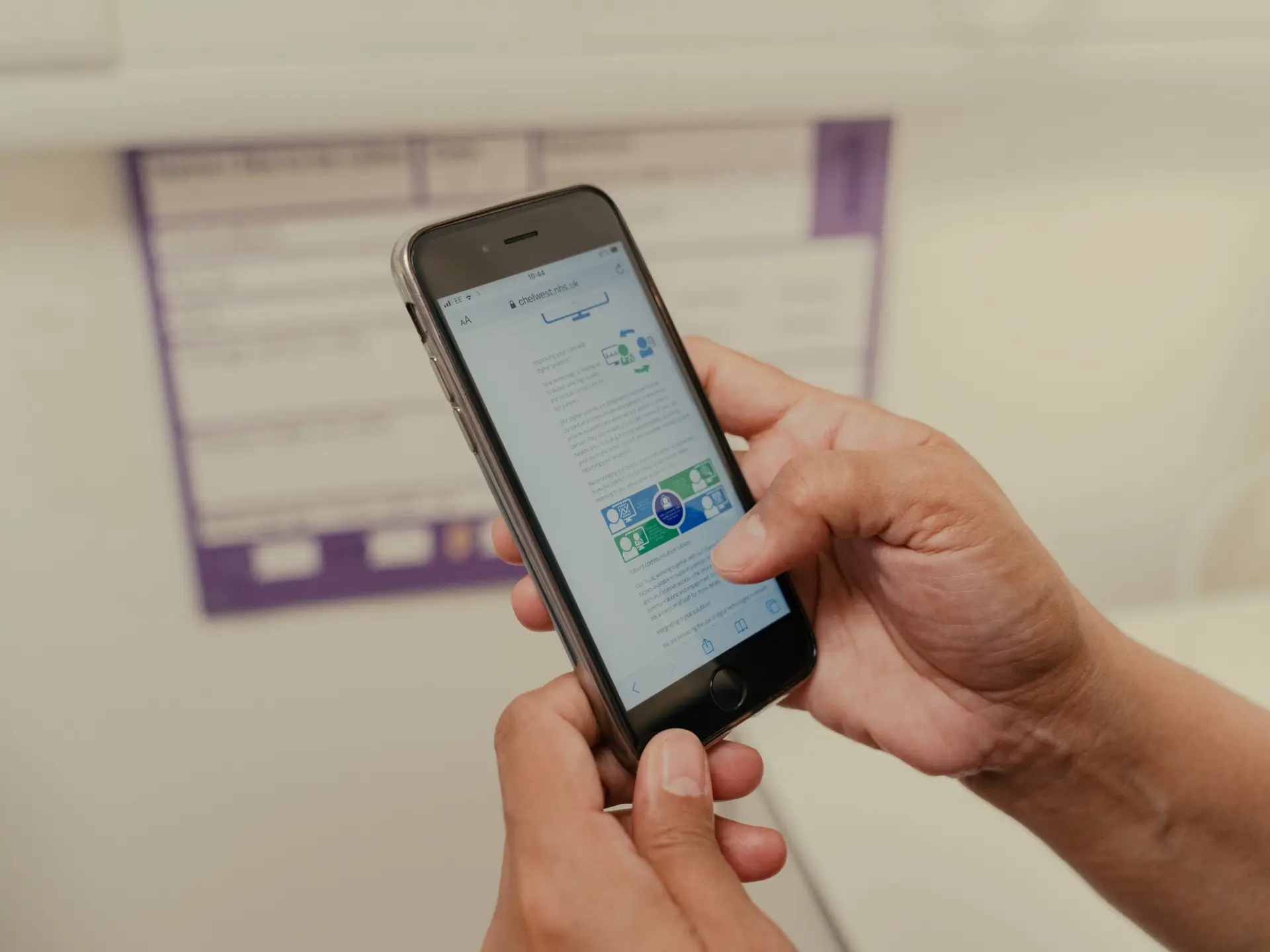
It can be a significant challenge, especially when you’re not feeling well, to navigate new apps, technologies and tools. And issues around digital literacy can impact staff as well. I think there’s a huge amount of work for everyone to do together to make sure that the technology and devices we’re using are as inclusive as possible.
We do, however, already have measures in place to engage patients, including a dedicated team of nurses who support patients on their journey, from understanding the technology to supporting them once they’re at home. The Trust is also working with digital inclusion groups and providing training packages as well as patient stories. These narratives provide insight into RPM and encourage others to get involved with it.
What is the future of RPM?
We’re on a journey to have a digital hospital that sits alongside our physical one. With these technologies, you can have digital outpatients, digital inpatients, digital population health management.
Digital hospitals will provide remote care, including virtual consultations and continuous monitoring, helping patients get timely treatment while reducing hospital visits. This will make healthcare more accessible and improve patient outcomes.
They will also help staff to innovate and use their skills in a way that creates maximum value for everyone. Staff will have greater flexibility in where and how they work, which can mean a better staff experience, which we know translates directly into better patient care.
What is the future of the CW Innovation programme?
I believe the next five years will focus on preventive care, earlier diagnosis, and the use of artificial intelligence (AI) to personalise care. The CW Innovation model is really successful, and I can’t see a reason to change it. It is key to what we’ve been able to achieve at the Trust and what we will try to achieve in the future. It will continue to support these efforts by connecting the right people with one another and enabling external providers and companies to come to us with ideas that not only give us inspiration but also help us to rapidly adopt new technologies into our own care pathways. The CW Innovation team has also grown, which means that we’ve got a dedicated team in house to support with funding, governance, evaluation and communications.
How can we further embed a culture of innovation at the Trust?
In my role as Clinical Lead for Innovation, one of the things I’ve been working on is the importance of building a culture of innovation within the organisation. The message I want to send is that innovation is for everyone, whatever your role, whatever you do, whatever your skills and qualifications. I’ve got no specific qualifications that make me eligible to be Clinical Lead for Innovation – I’ve managed to get here because I’ve got experience of doing it, but I’ve also had a lot of support along the way. I want staff to think of innovation as being part of their roles. If they have an idea of how we can do things better, I want them to know that we can support them.
