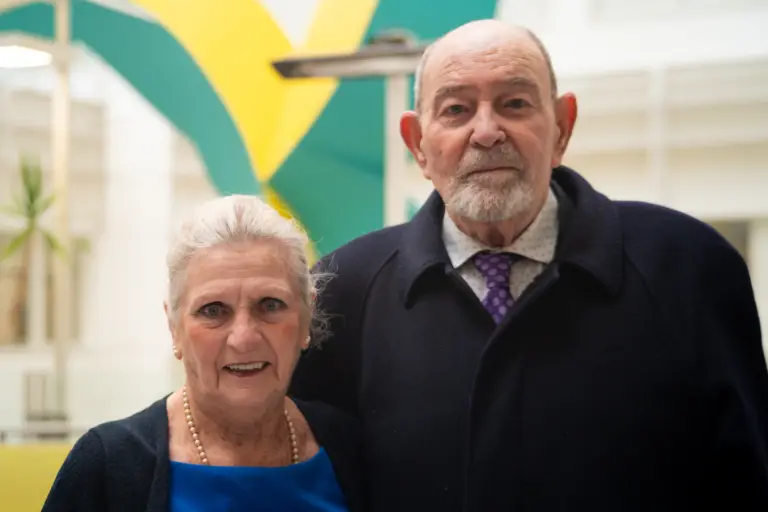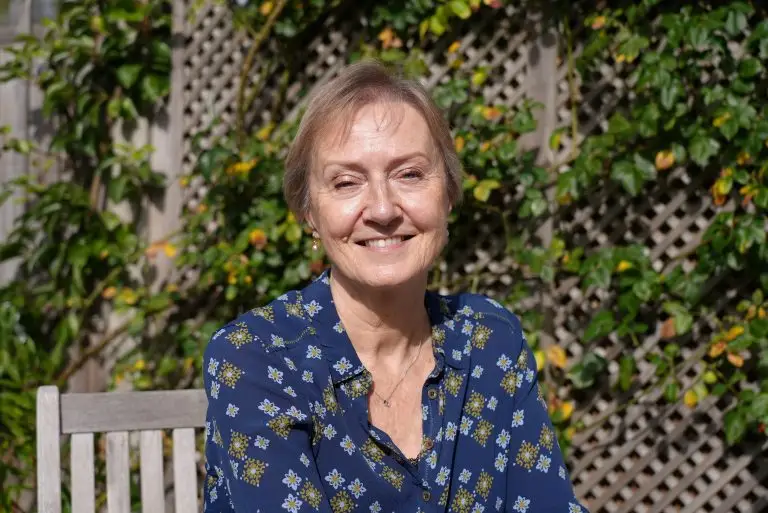
Thanks to funding from a CW+ grant, a pilot service at Chelsea and Westminster Hospital has made psychological support a key part of care for patients with inflammatory bowel disease (IBD). We spoke to one of the clinical psychologists behind the programme – and a patient who says the support has made a real difference to her treatment and wellbeing.
Anna's story
In this video, Anna, a clinical psychologist at Chelsea and Westminster Hospital NHS Foundation Trust, talks about the powerful impact of making mental health support an integral part of IBD treatment. From reducing depression to helping patients manage symptoms and better understand their condition, the service has changed lives – and set a new standard for joined-up, compassionate care.
Emma's story – a patient's journey
Emma is being treated for inflammatory bowel disease at Chelsea and Westminster Hospital. Here, she talks about her experience of the integrated psychology service pilot, and how it has helped her prioritise her emotional health alongside her physical health.
I’m a teacher, and I’ve had to go part time because of my condition. I have good days and bad days, but it’s quite an exhausting disease and it feels relentless at times. It can be tricky to manage, and for me, stress and anxiety are big triggers.
‘It was comforting to be able to talk honestly and openly’
It was actually my mum who asked my consultant about support, and he signposted me to the psychology service. I was struggling with the pressures of work, which was leading to more flare-ups. I realised I need to address the emotional aspects of my condition as well as the physical, so I signed up.
It was comforting to be able to talk honestly and openly about my condition, and some of the difficulties I was facing. It was a very supportive environment, so it helped to build my confidence and resilience in facing the challenges. It felt reassuring to hear someone say ‘it won’t always feel like this’. I realised that some of the pressures I was feeling weren’t necessarily to do with me – they were more about the environment around me, and that prompted me to make some changes in both my work life and my personal life.
‘It has given me the confidence to say “no” to certain things’
I used to think that it was a bit self-indulgent – selfish, almost – to prioritise self-care. I think a lot of people, especially women, can feel like that. The therapy helped me realise how important it is, and has given me the confidence to say ‘no’ to certain things and prioritise going to the gym or going for walk, for example – things that will make me feel better, both physically and mentally.
It’s different to what I would have experienced if I had done talking therapy through my GP. The service is specifically for people with IBD, so the therapist already knew a lot about the condition. I didn’t have to explain what it’s like and the challenges of living with it – she knew where I was coming from, and tailored her support accordingly.
‘There’s nothing to lose, is there?’
I can understand how someone who hasn’t had any kind of talking therapy before might be quite hesitant to try it – they might not necessarily think that it could help with a physical condition, but there’s plenty of evidence that your gut and your mind are very much interconnected.
I would say it’s 100% worth a shot – there’s nothing to lose, is there? I think having it in the hospital as part of your medical treatment also helps to remove any stigma around reaching out for help.
It helps you to kind of explore things you necessarily haven’t thought about, or things you didn’t realise could be holding you back from feeling better. It encourages you to take those initial steps towards treating your whole self. It can give you the boost you need and put you on the right path to managing your condition in the best way you can.
‘It has changed the way I view myself and my condition’
This psychology service is a pilot, but I think it should be a standard part of IBD care. It has really changed the way I view myself and my condition. It helped me during quite a tricky time in my life, and I owe a lot to the lovely psychologist I spoke to, and to CW+ for funding the pilot.
When you’re busy working hard, looking after family and so on, it’s just another thing to deal with and you tell yourself ‘just crack on and stop going on about it’. But actually, the therapy has taught me that it’s OK to say ‘you know what? I need a day, I feel a bit rubbish.’ It was reassuring to be told that people will understand that.
Without the therapy, I think I might still be in quite a stagnant place with my health. I probably wouldn’t have invested in myself in the same way, or taken the steps I needed to take to focus on my goal of remission. I’m very grateful to have been given the opportunity to do it.
It’s something I reflect back on, even now, if I’m having wobbly day and things aren’t going right with my tummy, or things aren’t going right at work. I draw on those sessions and it makes me realise I’m actually a lot more resilient than I think I am.
Got an idea that could improve patient care?
If you’re a member of staff at Chelsea and Westminster Hospital NHS Foundation Trust and would like to speak to us about funding for a project, get in touch!