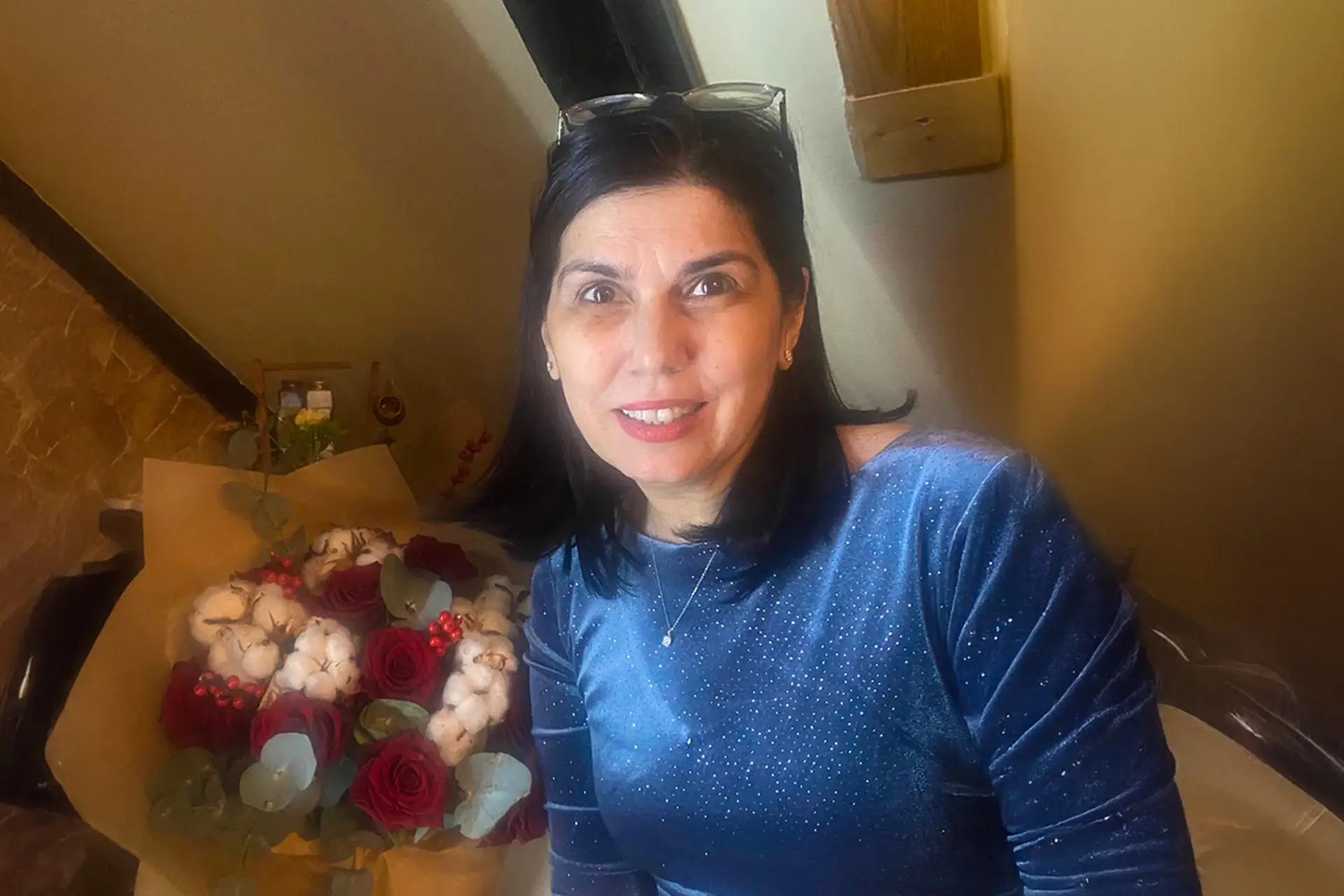
Infectious disease specialist doctor Roxana Cernat talks about her participation in the Clinical Observation Programme at Chelsea and Westminster Hospital, and how sharing knowledge and experience with other clinicians has impacted the HIV care she and her colleagues provide in her home country of Romania.
I am an infectious disease specialist working in Constanța, a port city on the Black Sea coast in Romania. I have been involved in the treatment of infectious diseases for 20 years, but I have focused exclusively on HIV for the past two years.
In May 2024, I was nominated by multinational pharmaceutical company MSD to participate in the Clinical Observation Programme at Chelsea and Westminster Hospital. The programme brings together clinicians from across the world, allowing them to share knowledge and experience that they take back to their own countries. Chelsea and Westminster Hospital is internationally renowned for its leading work on HIV, and its Clinical Observation Programme advocates for a multidisciplinary model of care for people ageing with HIV. My participation was made possible by a grant from MSD, and the Clinical Observation programme is facilitated and project-managed by CW+.
‘Stigma is a significant problem’
Several factors make treating HIV especially challenging in Constanța. Between 1987 and 1989, Constanța became the city with the largest number of HIV-infected children in the world, largely due to unsafe medical procedures and mother-to-child transmission. Since then, many of these patients have died, but around 450 are still alive and we’re working hard to support them to live normal, healthy lives.
Many of our patients were infected at a young age, which has led to unpredictable and complex needs. Patients have often had to take strong medications for long periods. They might also have other physical or mental health conditions that impact their needs – Romania has very high prevalence of tuberculosis and Hepatitis B, for example. Recently we have also observed patients entering the premenopausal phase far earlier than expected, or developing kidney dysfunctions or cardiovascular disease. We have had to create a tailored programme for these patients.
There are also social challenges. Stigma is a significant problem, which sometimes makes patients reluctant to disclose their diagnosis to others, including doctors. We spend a lot of time working to educate doctors, nurses and the broader community about HIV. We have a large MSM [men who have sex with men] population, and PrEP [medication that prevents HIV and promotes sexual health] is not available from state healthcare in Romania. This means that people need to buy their own medication from pharmacies.
‘We have had to learn from and adapt the care we give our patients’
Constanța’s position on the Black Sea coast also brings complexity to the community. As a port, we have a highly mixed population. Several of our patients are sailors, so their care and medication must be planned around long voyages. After Russia invaded Ukraine, many Ukrainians were also displaced here. Patients often present with different strains of HIV to those normally found in Romania.
These challenges mean that we have had to constantly learn from and adapt the care we give our patients over the past few decades. Fortunately, Spitalul Clinic de Boli Infectioase Constanța (Hospital for Infectious Diseases), where I work, is better equipped than many other facilities in Romania. An NGO called the Baylor Black Sea Foundation supports our work through extensive testing in the community, and we also have a broad range of in-house capabilities. From legal and social workers to pulmonologists, dermatologists, dentists, psychologists and cardiologists, everything is under one roof.
‘Everyone was very open and supportive – I had lots of questions!’
Our partnership with Chelsea and Westminster Hospital NHS Foundation Trust is hugely beneficial to the work we do, and is why I was able to spend five days on the Clinical Observation Programme. I had the opportunity to meet and learn from internationally leading consultants in the field of infectious diseases, benefiting from the long history of HIV care at Chelsea and Westminster Hospital. Everyone was very open and supportive – I had lots of questions to ask them! I was also lucky enough to be given the chance to see how they are conducting clinical trials in their Clinical Research Facility, which I learnt a lot from.
Most instructive from my time in London was seeing the holistic, multidisciplinary model of care championed at Chelsea and Westminster Hospital. This gave me lots of ideas, which my colleagues and I have developed and implemented. We now have doctors from many different specialties working together to support all the needs of our patients, which can sometimes be quite complex.
‘I'm helping to spread the word about the great work at Chelsea and Westminster’
I am so grateful to CW+ and Chelsea and Westminster Hospital, and all the incredible staff I met there. It was an amazing experience, and I really feel that I returned to Romania with a better understanding of how to provide the best possible care to my patients. I’ve just been to two conferences in Romania, where I spoke about what I’d learnt during the Clinical Observation Programme – my colleagues were all very interested, so I’m helping to spread the word about the great work happening at Chelsea and Westminster. My experience in London will greatly benefit all our patients.
The Clinical Observation Programme is just one of the ways in which CW+ supports the pioneering work of our Trust’s HIV and Sexual Health Directorate. Find out more in our recent report.
Please do not reproduce without permission.