
In 2016, CW+ commissioned a report from design consultancy Arup that provided a summary and analysis of the key components of good patient-facing healthcare design. This report became the foundation for the CW+ Design Standards Guide.
An evolving document, the guide aims to provide a coherent summary of the CW+ design philosophy, honed over years of practice, and a mechanism for capturing, recording and sharing our extensive work in the field of patient environment.
We use the Design Standards Guide to inform our work and bring a cohesive approach to the delivery of new schemes. Some of the key stress-reducing principles we follow are outlined below:
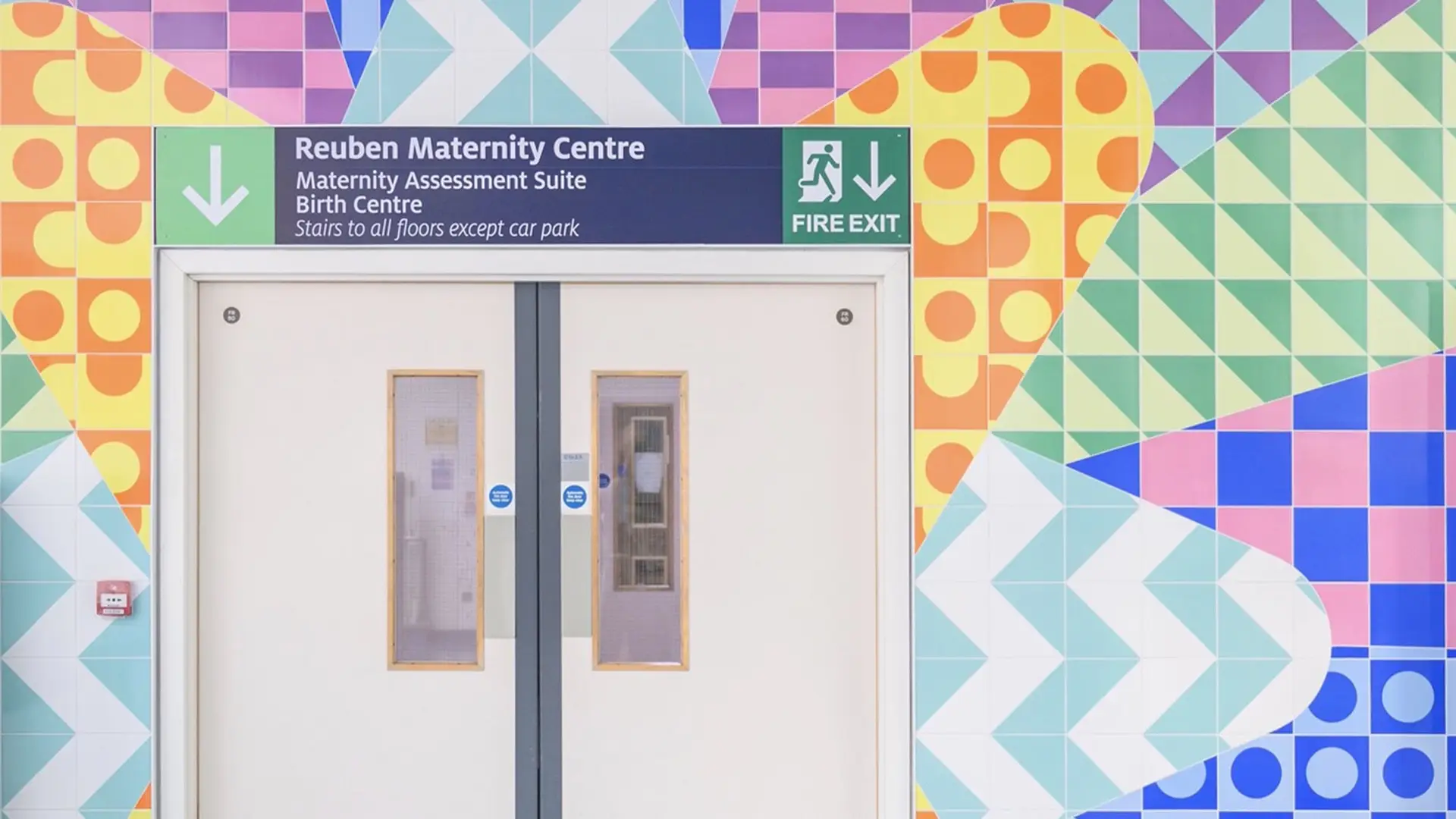
Many people trying to find their way through hospital buildings are stressed, anxious or disorientated. An effective, integrated wayfinding strategy is essential – not only to make the experience better and less confusing for patients, but also to free up staff time.
Designing environments that offer choice – over lighting, temperature, music, technology, privacy and comfort – helps to give patients a sense of autonomy and reduces stress.
Noise is a common concern in hospitals, disrupting patients’ rest and creating a challenging environment for staff. Thoughtful design plays a key role in reducing its impact.
The benefits of good air quality include protection against hospital-acquired infections, and the prevention of sick-hospital syndrome, which causes headaches, fatigue, and eye and skin irritation. Maintaining good air quality requires a comprehensive approach.
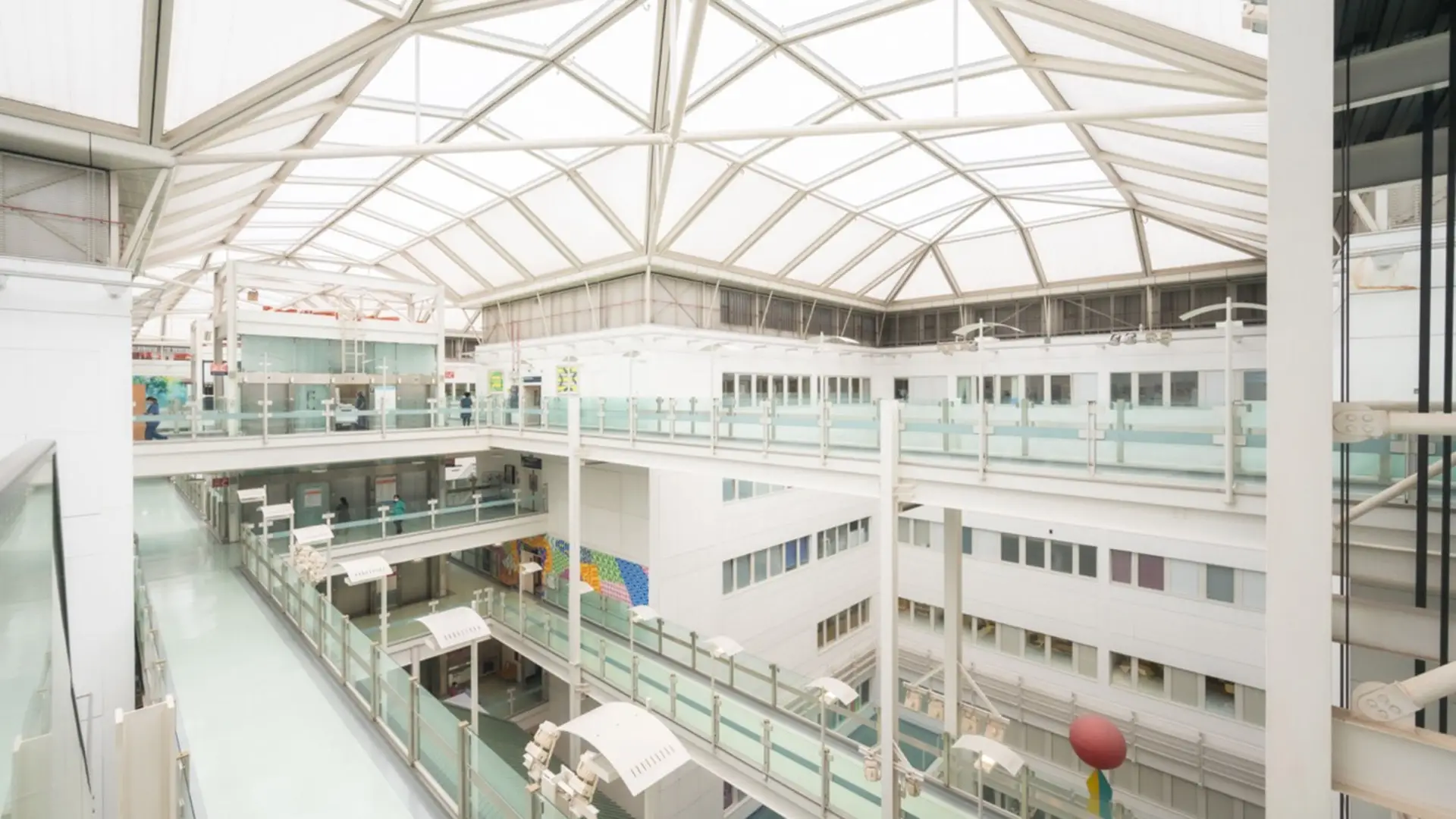
Harsh hospital lighting and limited access to daylight can disrupt the body’s natural cycle, leading to sleep disturbances, increased stress and slower recovery. All forms of light, not just natural daylight, should be a key design priority.
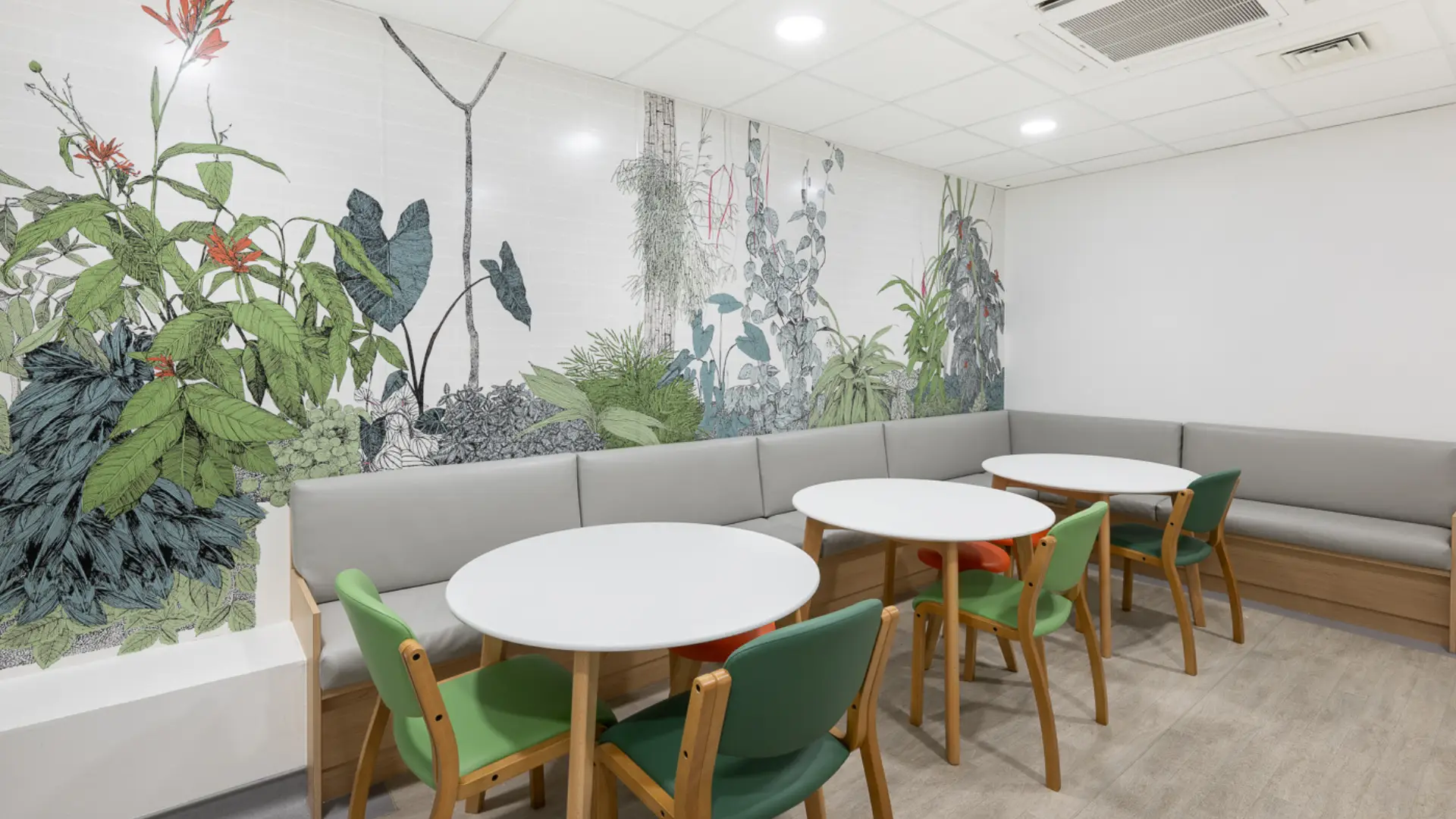
It is well known that direct access to nature can speed up healing, but indirect access, in the form of exposure to views and images of nature, can also be helpful.
A pragmatic approach to the use of colour in a healthcare setting requires careful consideration of context –patient demographics, clinical requirements, staff needs and the overall purpose of each space. Differentiating spaces with colour can also play a crucial role in navigation and wayfinding.
Thoughtful choices in furniture, finishes and aesthetic treatments can change the look and feel of a space, turning a sterile and stark environment into an inviting, calming and supportive space.
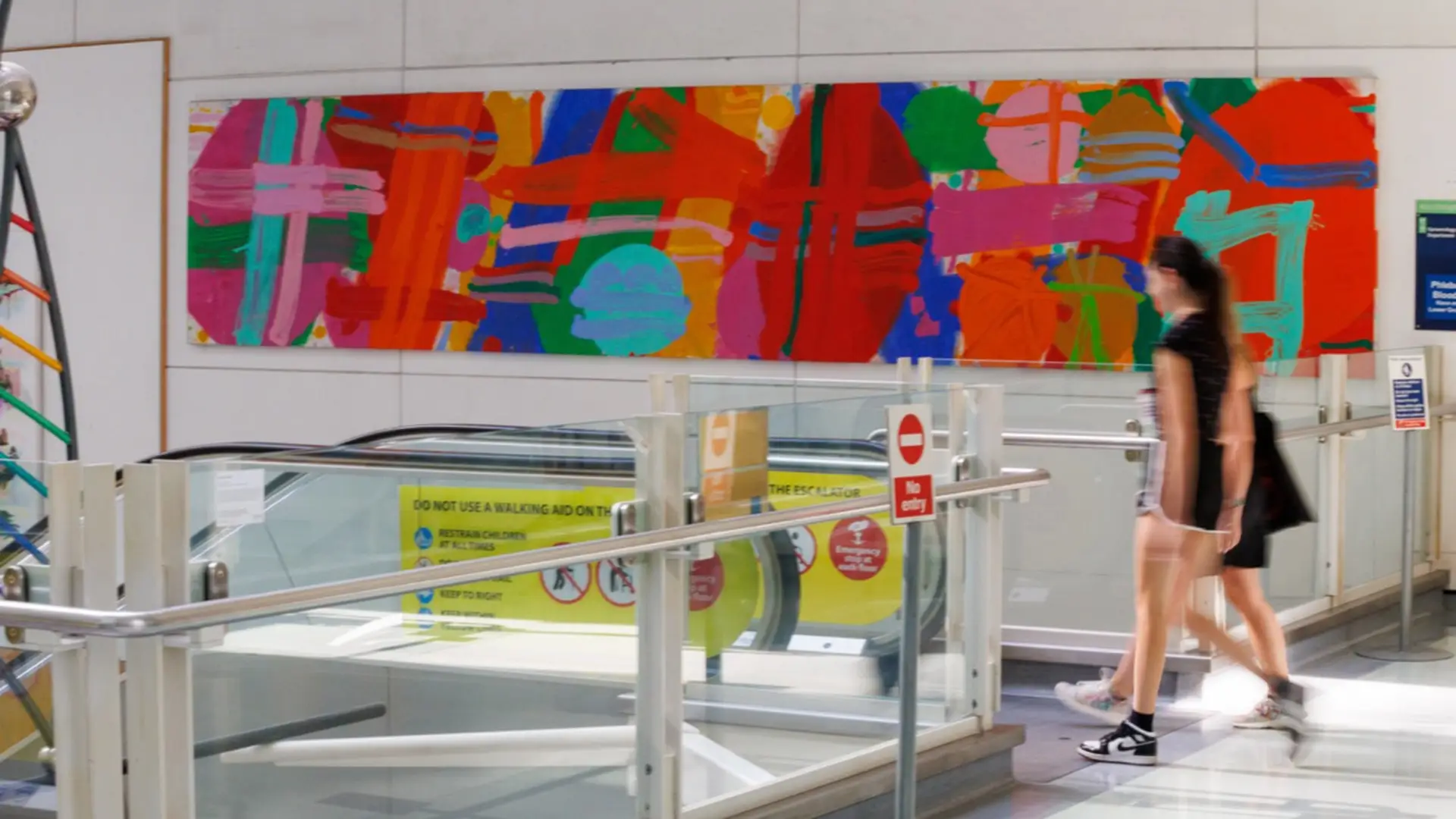
Visual art has a strong positive impact in healthcare, often enhancing mood, reducing stress and sparking conversation. Participatory art offers vital sensory and emotional stimulation, helping patients process and express their experiences.
Music plays a key role in shaping pleasant soundscapes. Its positive effects include reduced anxiety and pain, slower breathing and heart rates, and lower levels of stress hormones such as cortisol. Natural sounds such as flowing water or rainfall have also been found to enhance wellbeing.
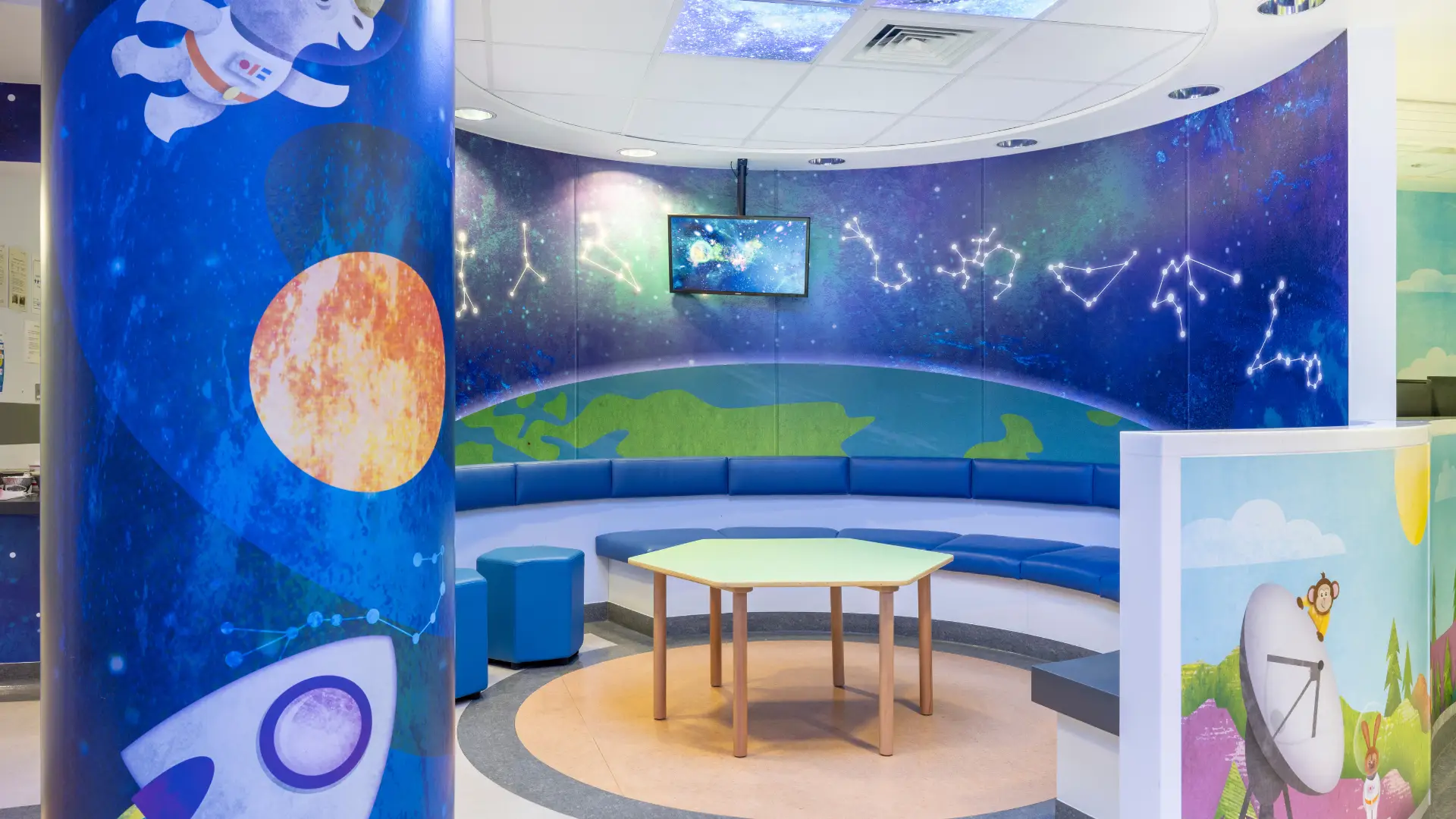
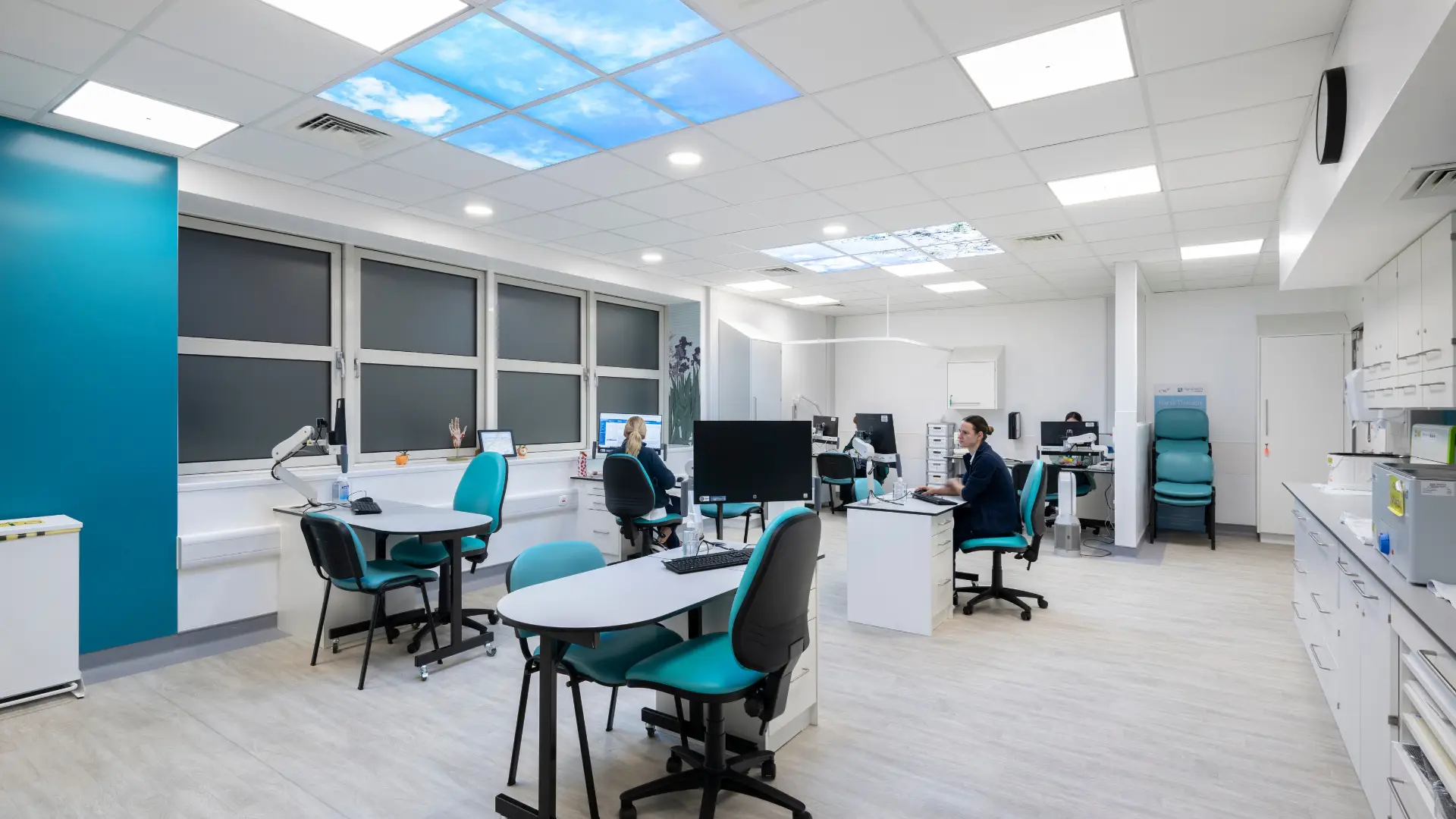
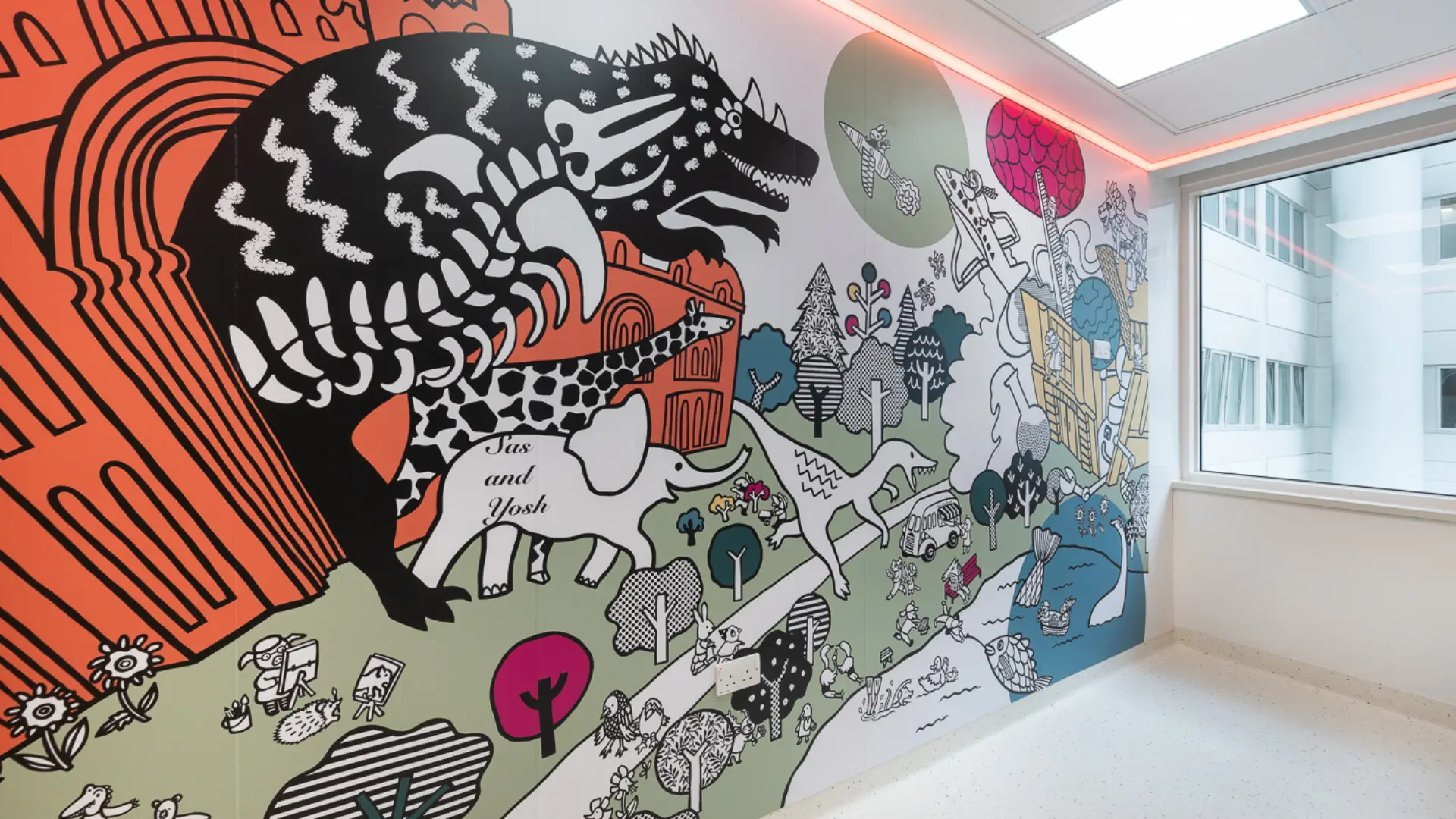
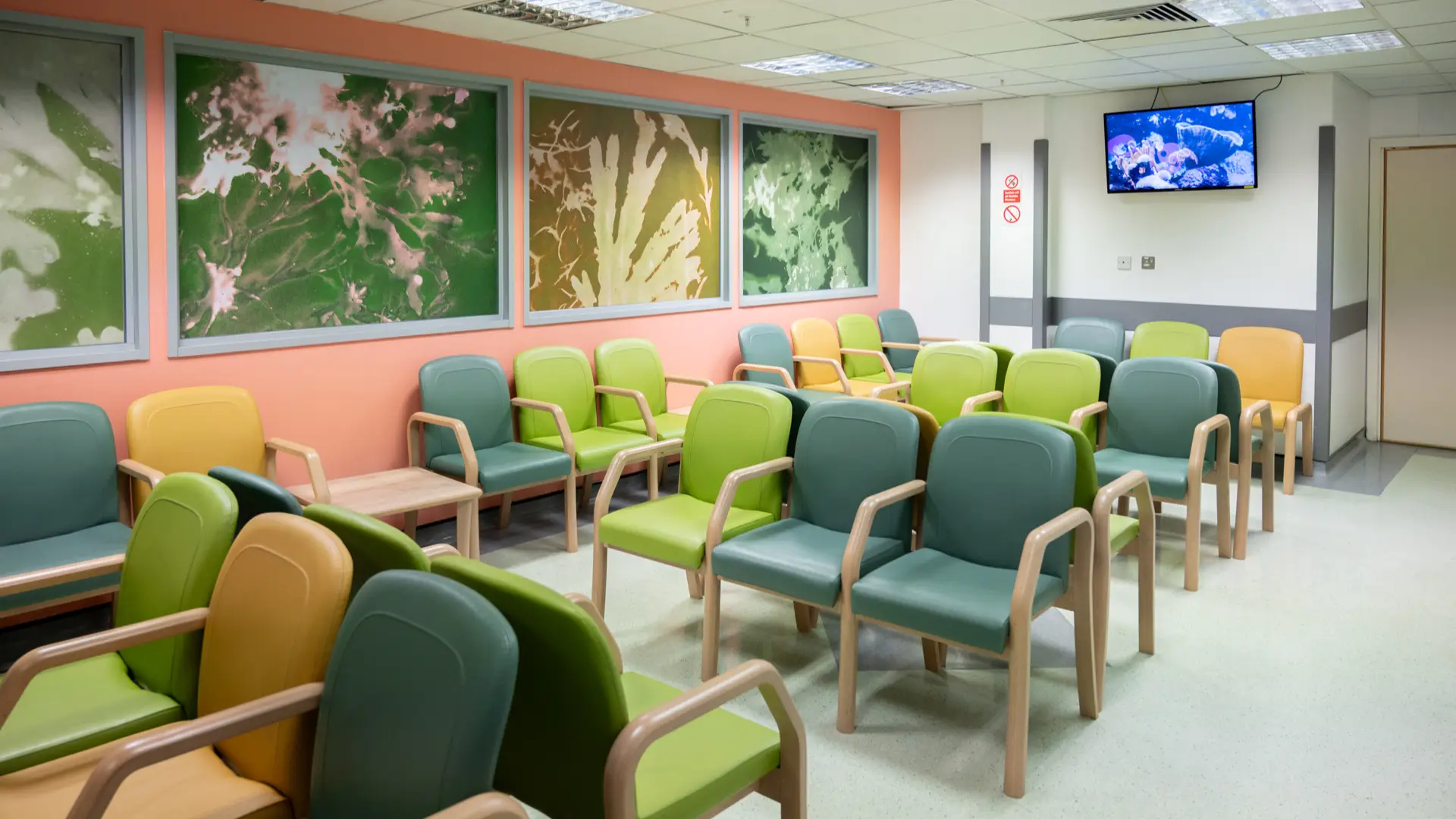
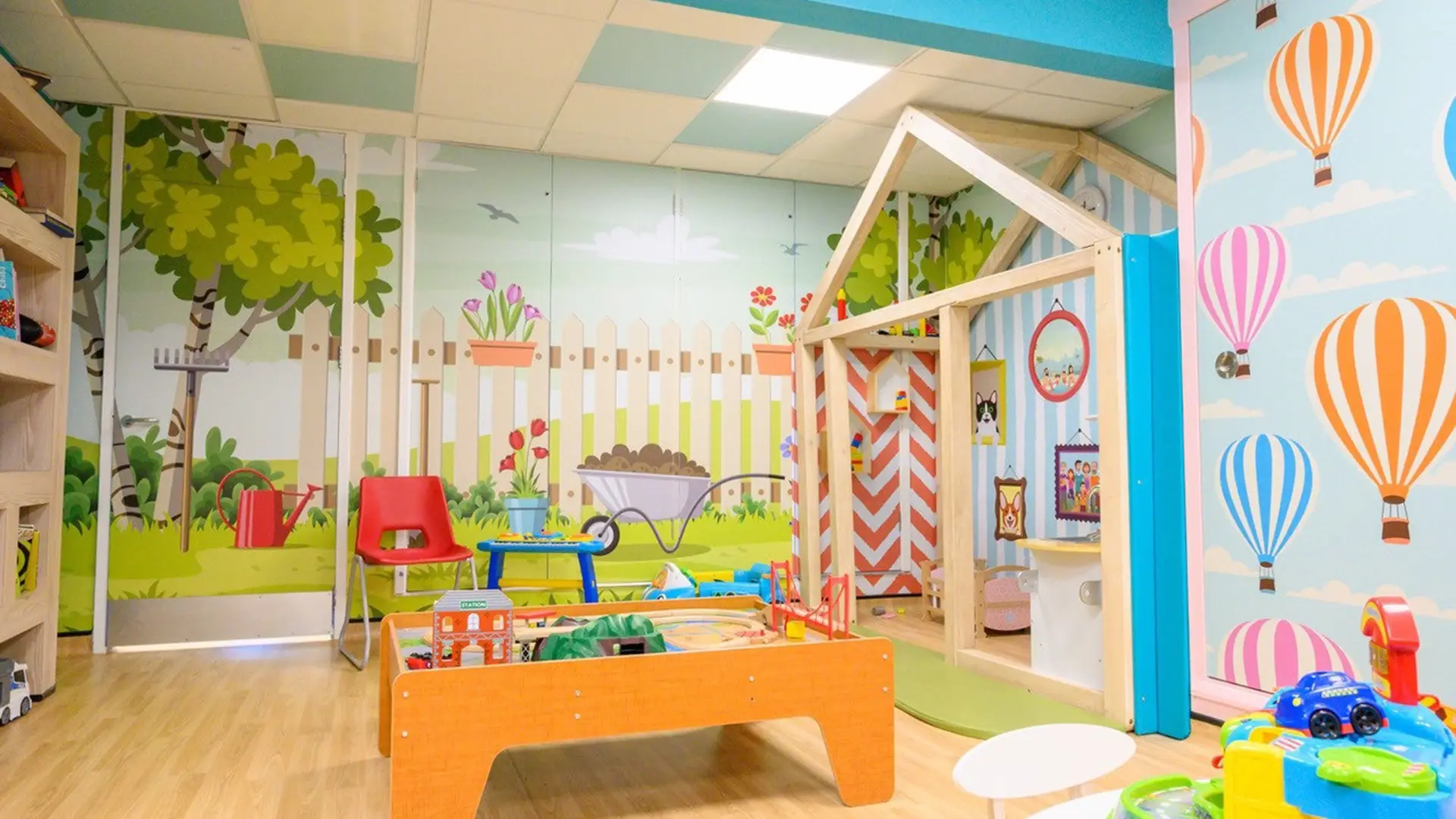
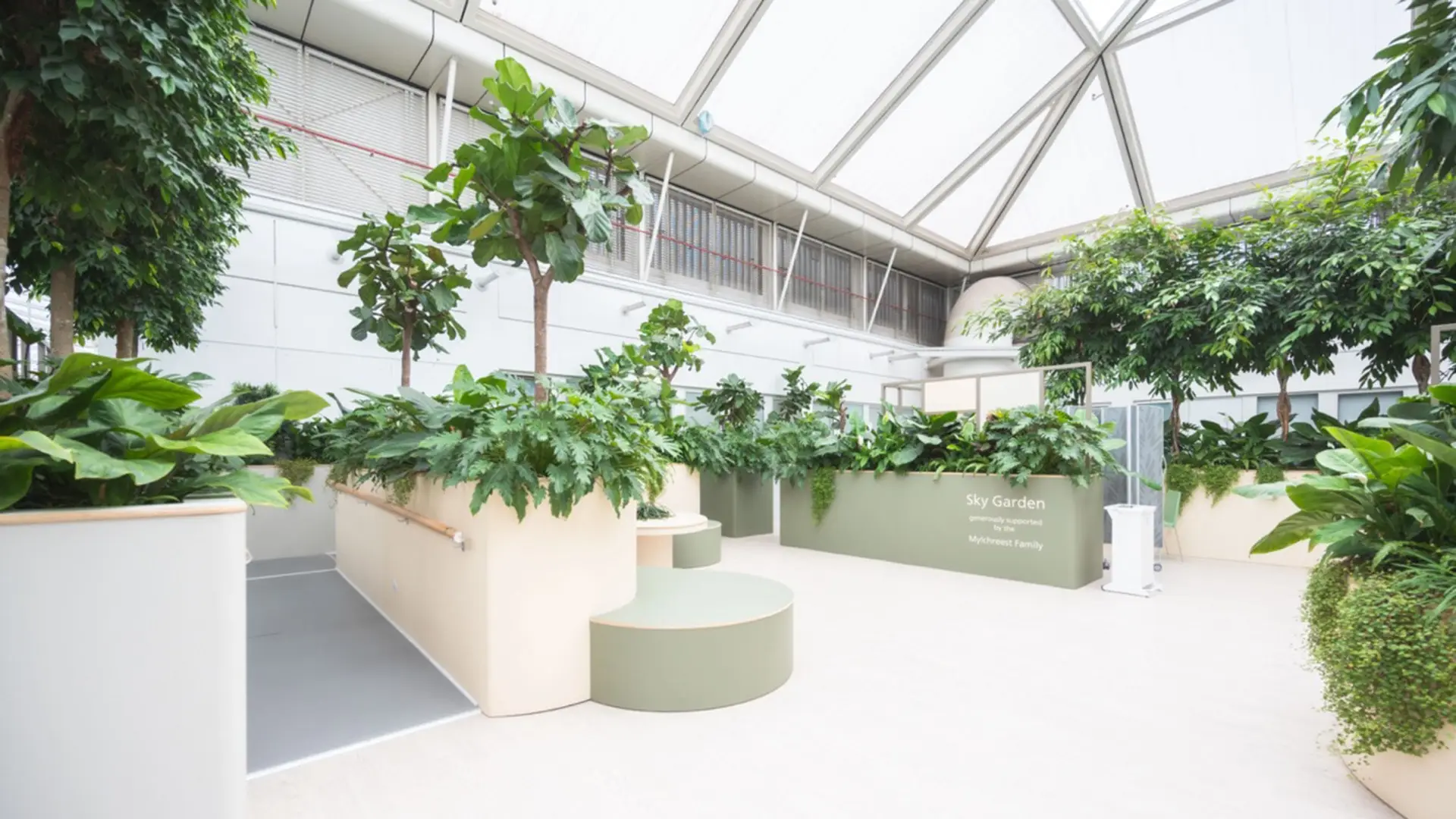
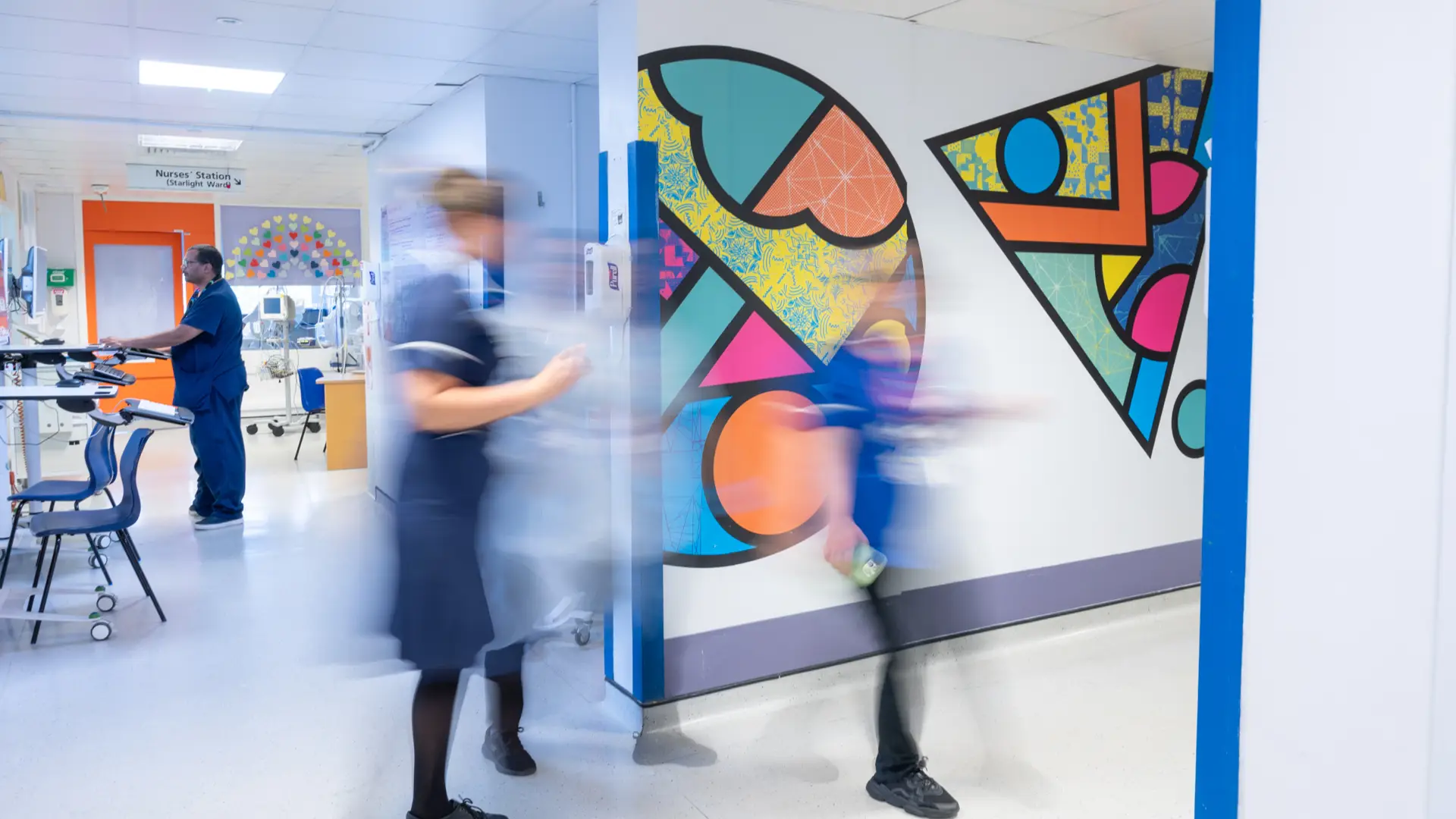
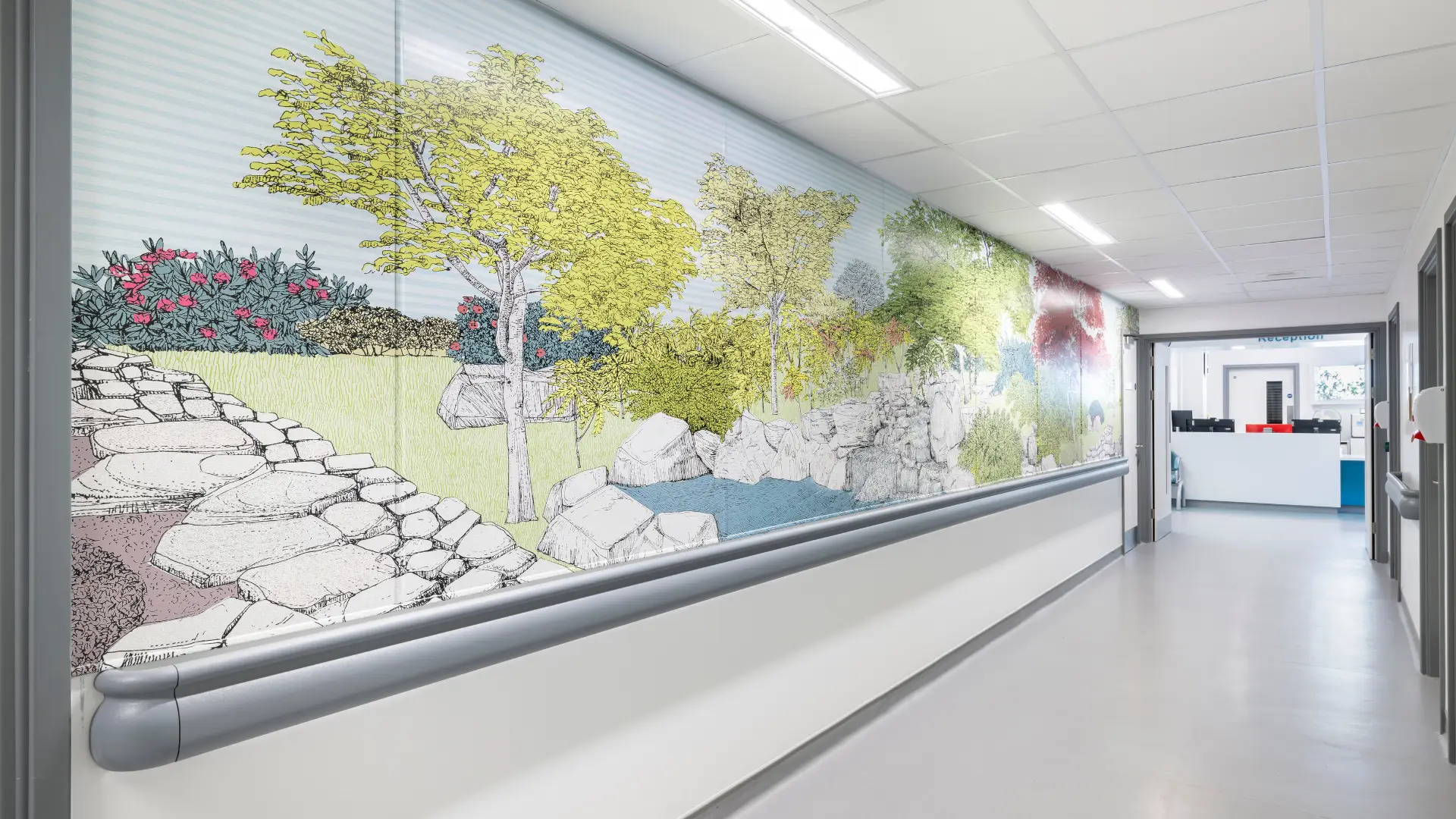
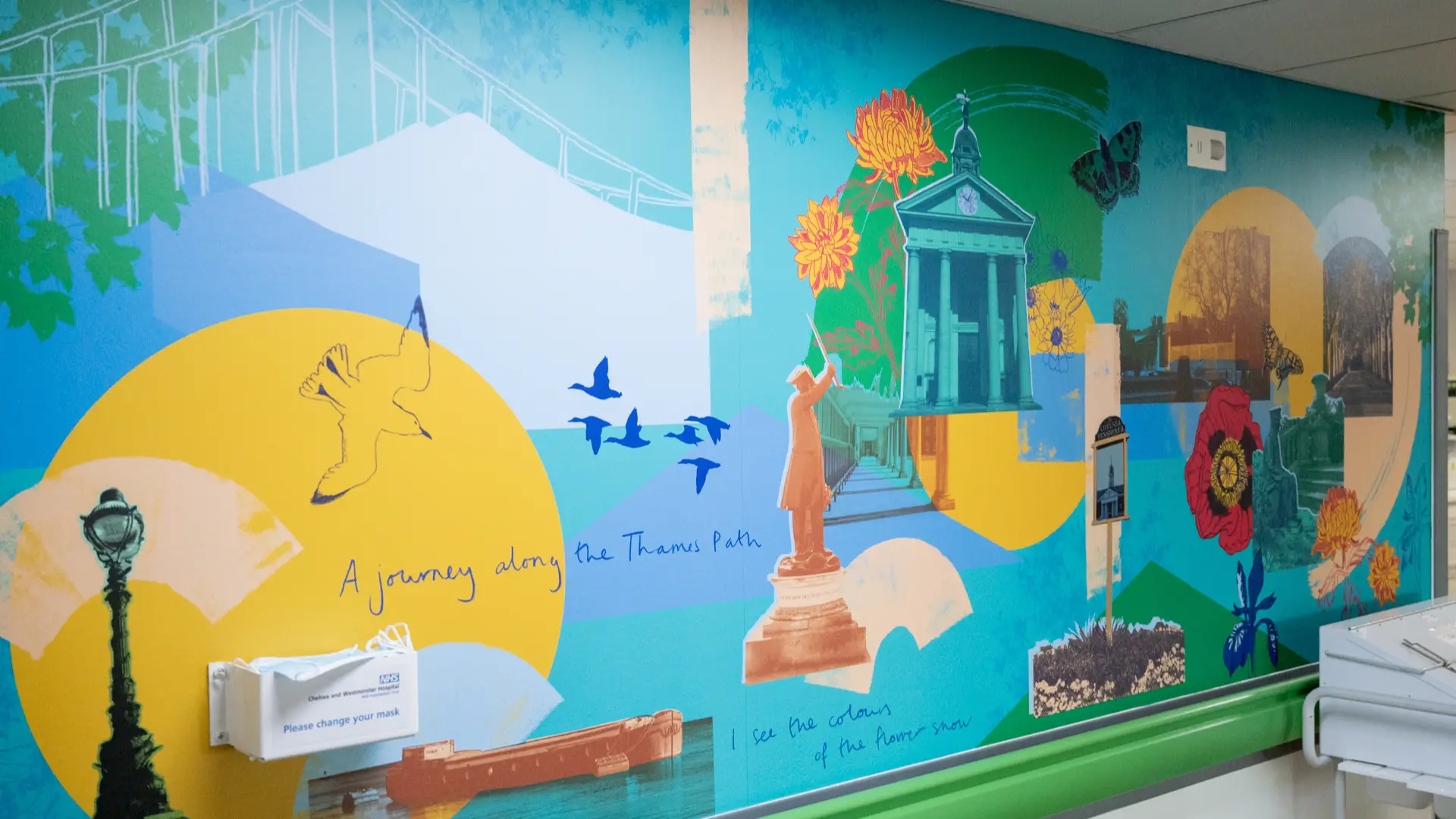
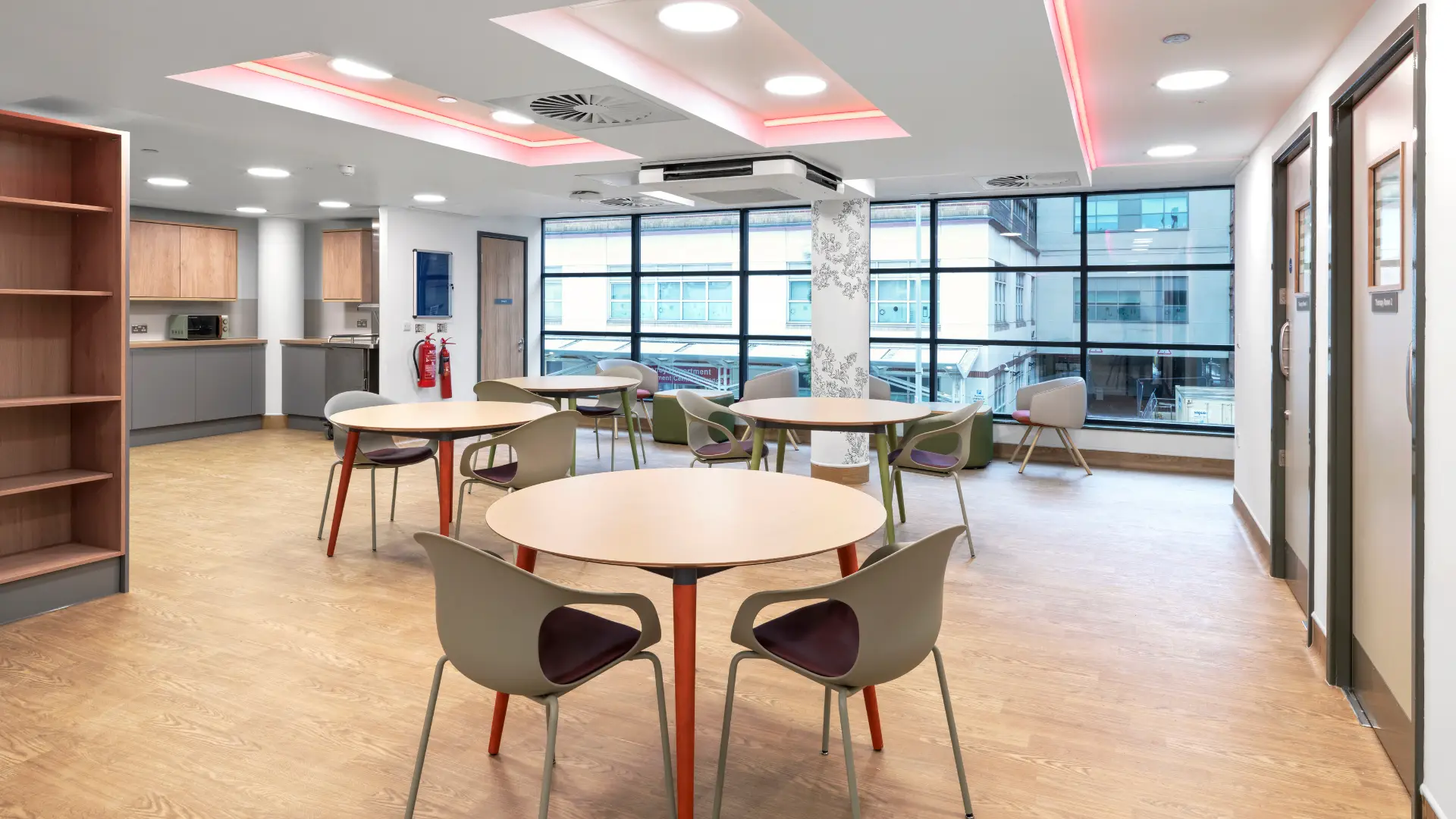
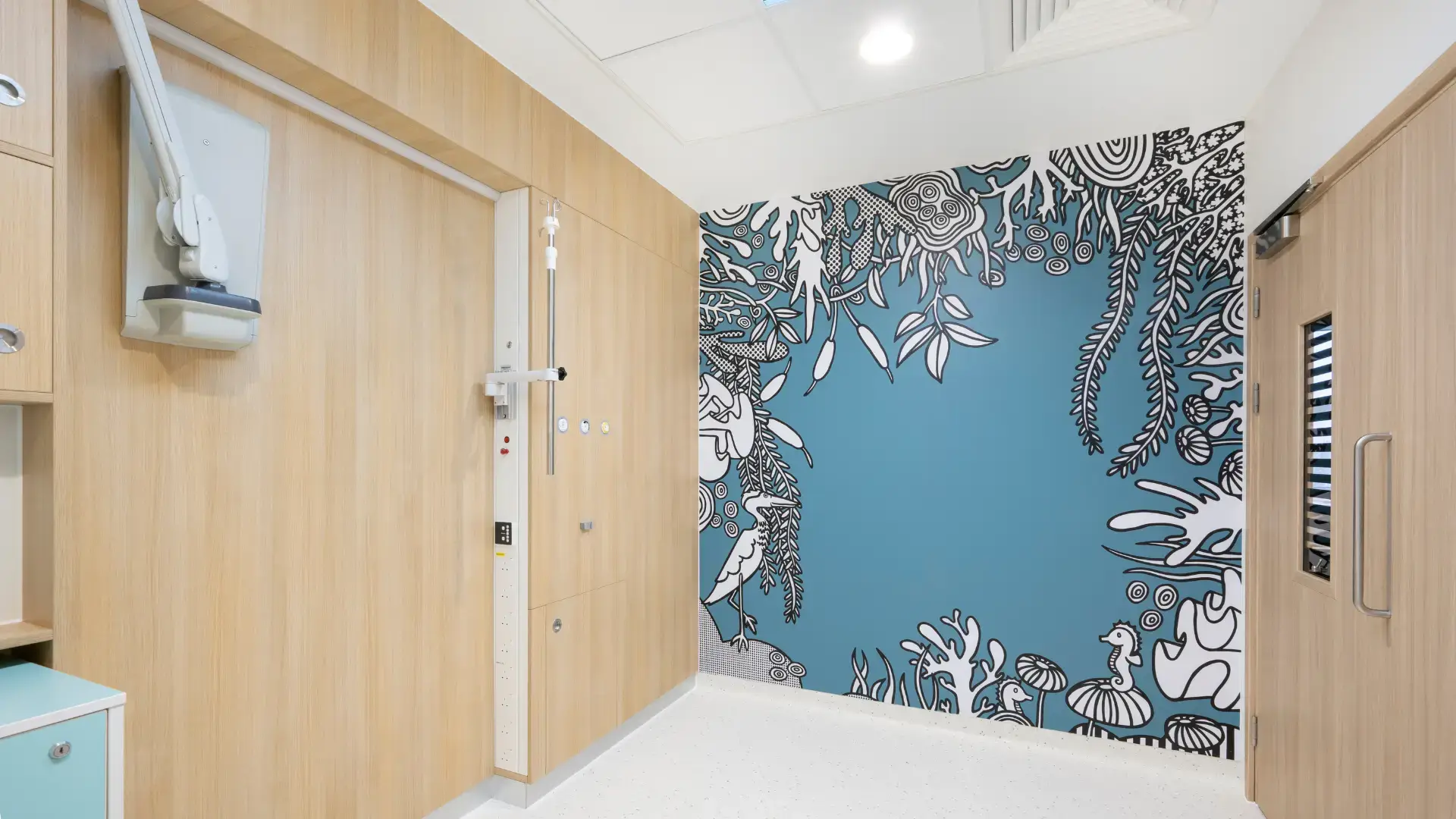
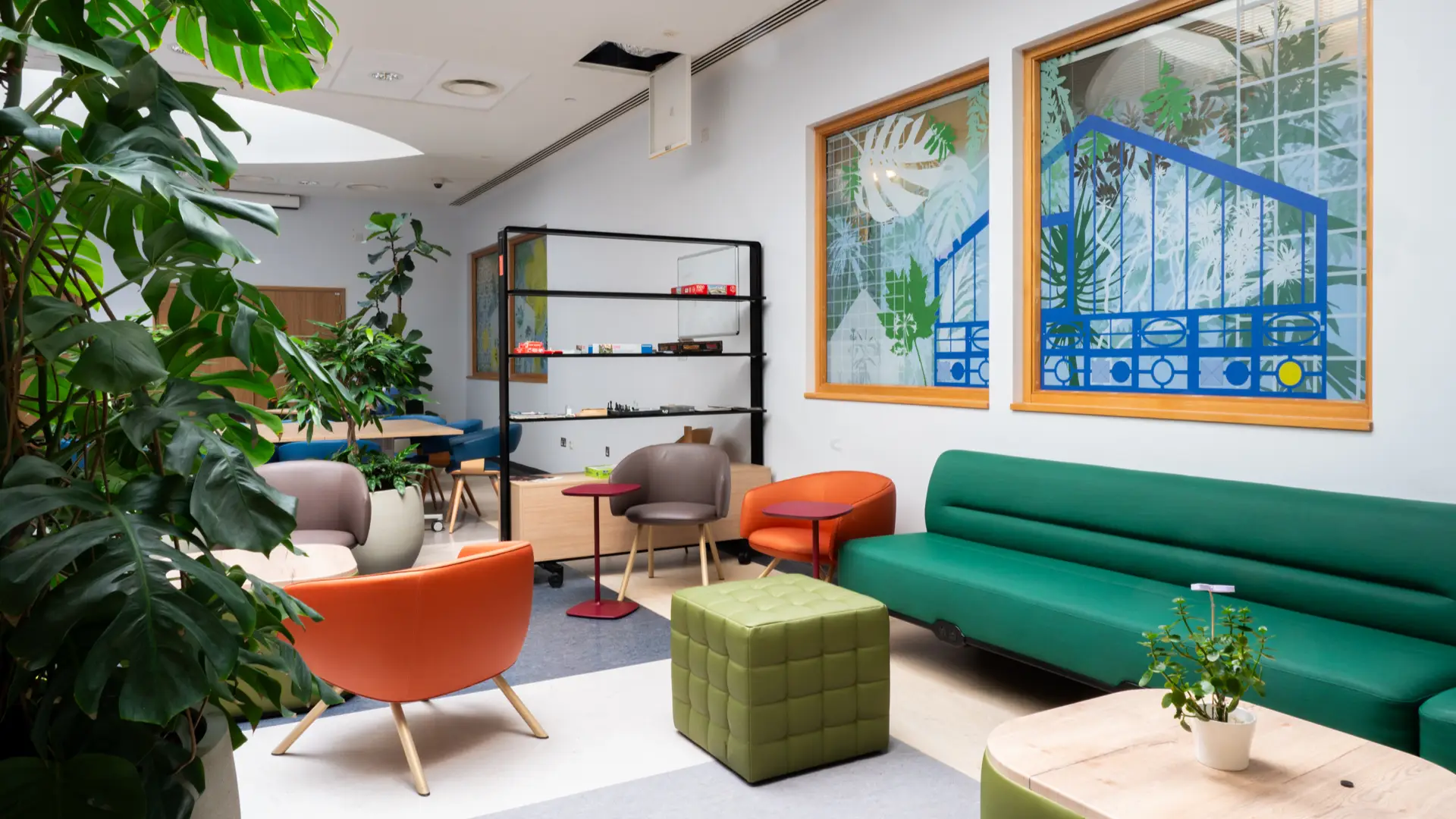
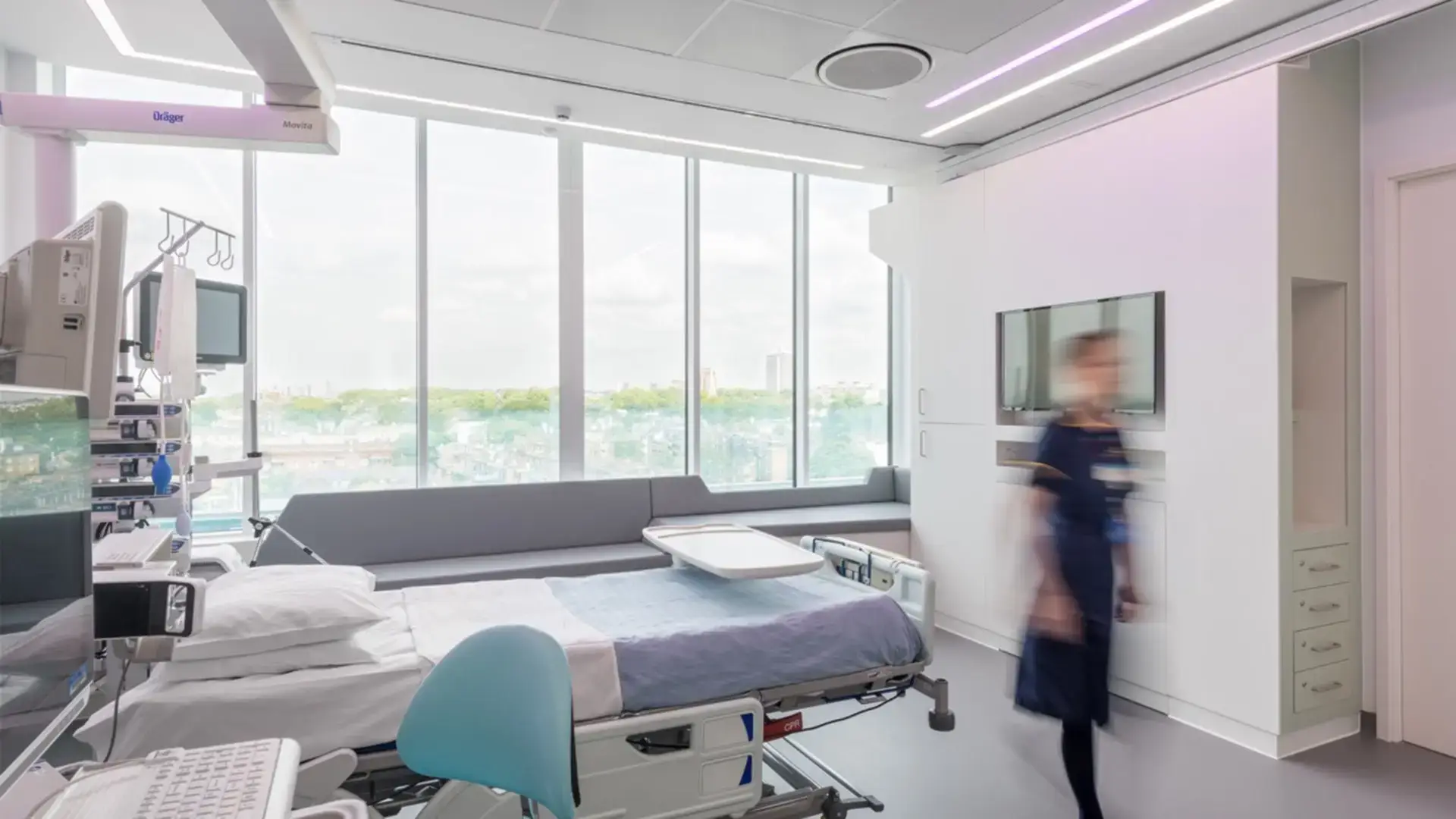
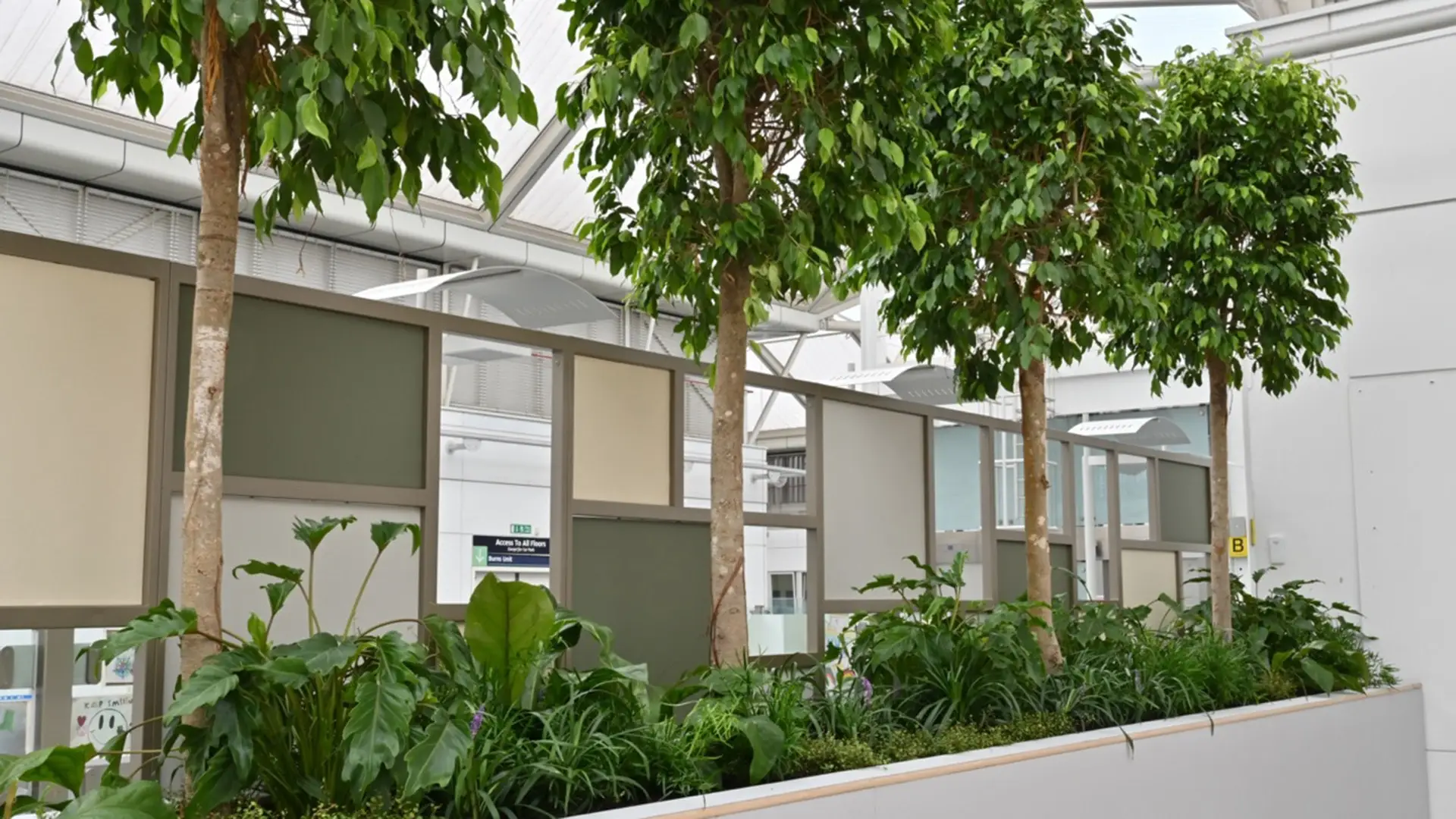
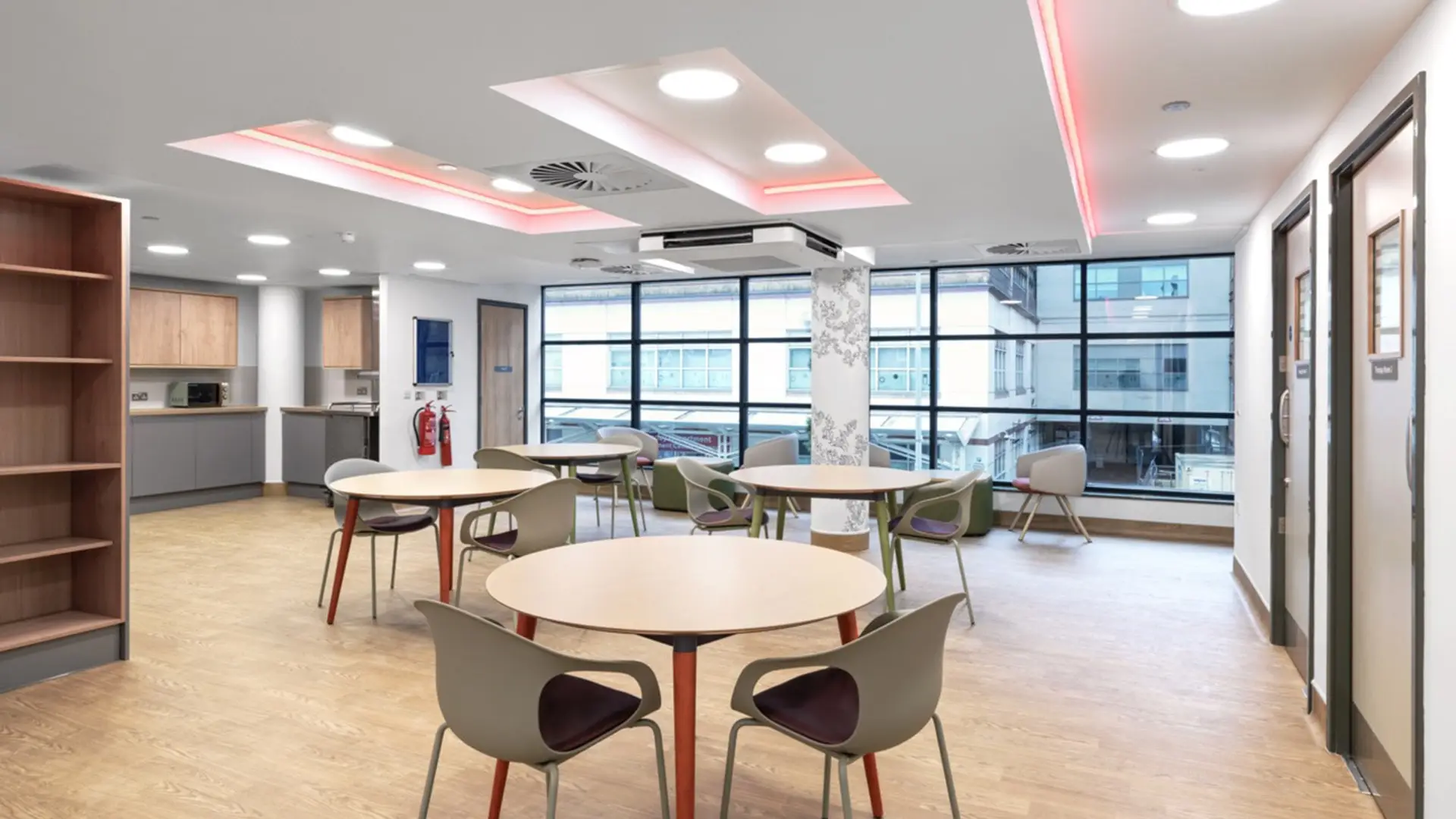
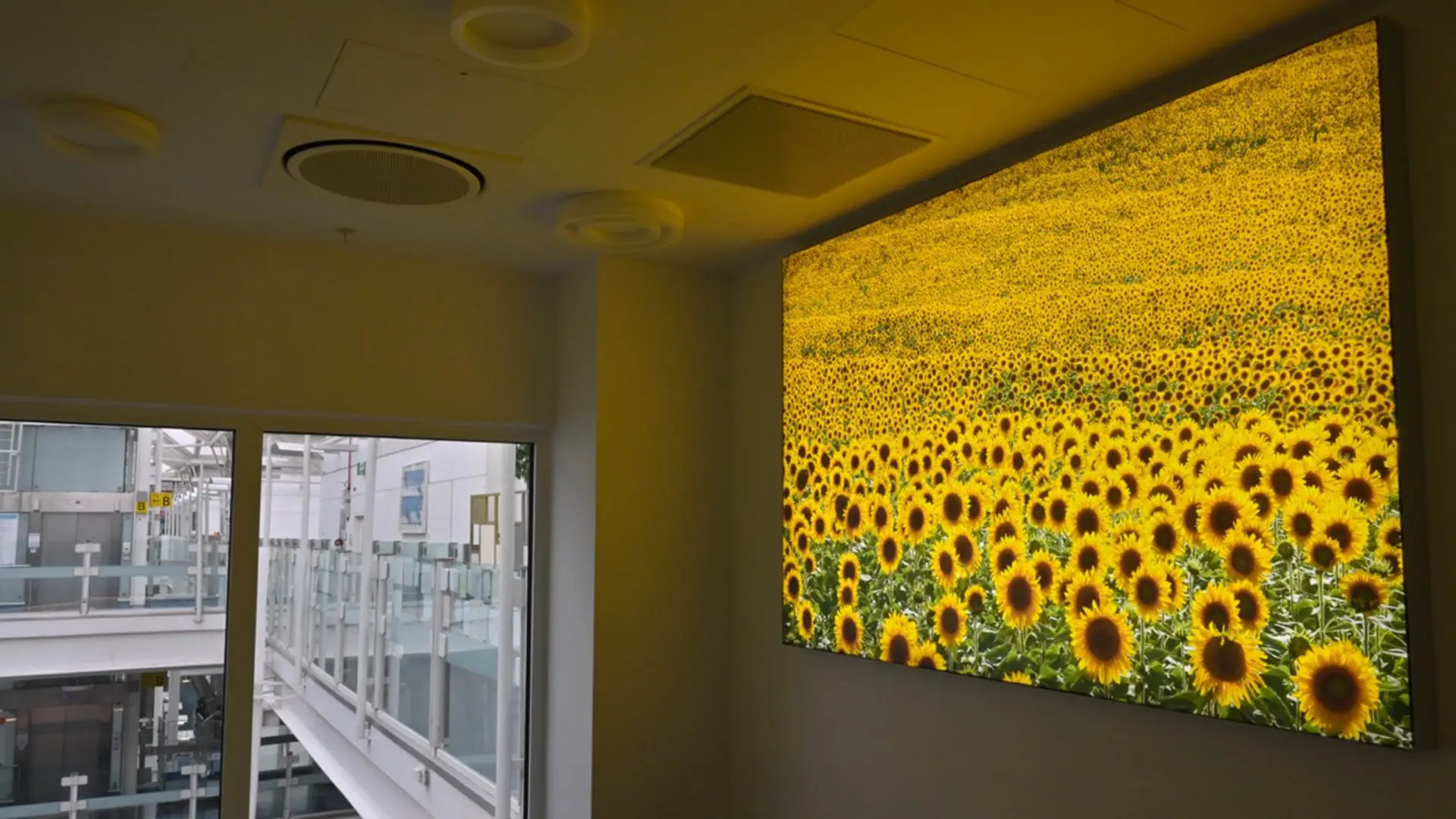
Our findings, shared through evaluation and case studies, support a holistic design approach. While we appreciate the restrictive factors of hospital environments, we also encourage fresh solutions, pioneer new practice, and seize opportunities to embed good design for the benefit of our patients and staff.
The Design Standards Guide will continue to evolve to reflect and define our work.
When Chelsea and Westminster Hospital opened, our art and design programme kick-started a movement of arts in health across the globe. Improving the environment for patients has an impact on the psychological, physical and clinical outcomes across our hospitals. We are committed to bringing together design, art and technology to create optimum healing environments that are patient focused while supporting staff in delivering the best possible care
Trystan Hawkins, Patient Environment Director at CW+
Our Design Standards Guide combines research and expertise to set out best practice in creating human-centred, sustainable healthcare environments.
Stay in touch
If you are happy to hear from us about news, fundraising, events, volunteering opportunities and how your donation is supporting our hospitals, please fill in your details below.
"*" indicates required fields